Showing posts with label Business Plan. Show all posts

Saturday, 29 August 2020

Fertilizer Production Line Configurations

The new fertilizer production line project should comprehensively consider local resources, market capacity and market coverage radius. In general, the annual output of small new plants is 10000 tons (1.5 tons / hour), 20000 tons (3 tons / hour) and 30000 tons (4.5 tons / hour). The annual output of medium-sized factories is 50000-100000 tons, and that of large-scale factories is 100000-300000 tons.
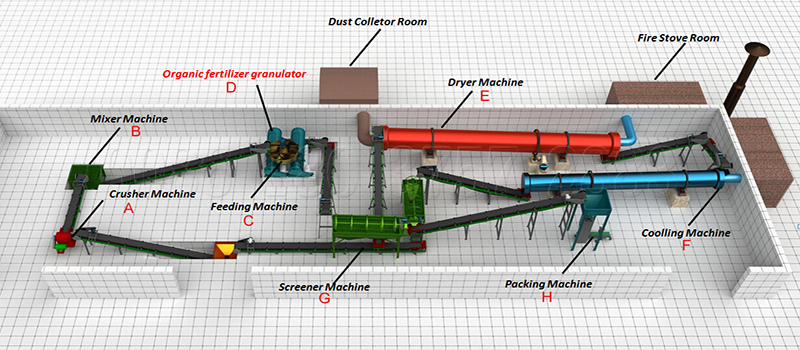
The investment scale and scheme design should be made according to the following conditions: raw material resource characteristics, local soil conditions, local planting structure and main crop varieties, plant site selection, NPK fertilizer granulator selection, production automation degree, etc.

Fertilizer production line

Several equipments of chemical fertilizer production line

1. Mixer. In addition to chemical fertilizer raw materials, some cohesive materials, such as clay, can be properly added in the mixing process. During operation, the material is evenly mixed by stirring back and forth with multi-channel rotating blades.

2. Fertilizer granulator. Organic fertilizer granulator is generally used in small-scale production to meet the requirements.

3. The rotary dryer is mainly composed of drying cylinder, transmission device, support device and cylinder tail sealing parts. The diameter ranges from 80 cm to 3 m and the length depends on the drying requirements. The dryer is a cylinder inclined to a certain angle in the horizontal direction. The material is added from the high end, and the high temperature flue gas and the material enter the cylinder in parallel. As the cylinder rotates, the material moves to the lower end due to gravity. The lifting plate is welded on the inner wall of the cylinder to absorb and drop materials, and fully contact with hot air in the falling process to achieve the purpose of drying.

4. The rotary cooler can reduce the moisture content when cooling a certain temperature. It is the same as the dryer equipment, but uses space-time gas to pump from the head to the outside, so there is no need to seal the tail.

5. Combined screen is adopted for drum screen, which is convenient for maintenance and replacement. This machine has the advantages of simple structure, convenient operation and stable operation.

Tuesday, 25 August 2020

Chicken Manure Composting Methods

 Composting method of chicken manure in garden

Animal manure such as chicken manure, duck manure and cow manure can be recycled by composting, and then made into organic fertilizer for use in the garden. Chicken manure composting is not only environmentally friendly, but also conducive to the growth of garden plants. Different from the fertilizer products produced by professional organic fertilizer production equipment, this method is simple and easy to use, and can be made and used by ourselves.


Simple composting method of garden chicken manure

1. Chicken manure, grass, flowers, leaves and other wastes are mixed with water, picked up the mixture, piled up, covered with plastic fermentation, when the fermentation temperature reaches 45 ° C, diffusion cooling, when the temperature is constant, the fermentation process is solved, and fermentation can be used.

2. Raw materials (taking the production of 1 ton of organic fertilizer as an example): 1.8 tons of livestock manure, 0.3 tons of rice straw powder or leaf powder, 2.5 kg of corn flour and 1 kg of rapid bacterial starter are required. Animal excreta + leaf or grass powder + corn flour + strain + mixture + compost + air drying.


2.1. First of all, the water content of the mixed raw materials should be controlled between 40% - 50%. Then, bacteria are mixed on the surface of the mixed fertilizer, and the raw materials are evenly put into the mixer for crushing and mixing. When mixing and crushing fertilizer, the water content should be controlled within 40% - 45%. Too much or too little water will affect the quality of fermentation. Stir evenly, thoroughly and fluffy without lumps.

2.2. The mixing raw materials are stacked into straw curtains with width of 1.5-2 meters and height of 0.3-0.4 meters, covered with aerobic fermentation. Generally speaking, the temperature rises to 50 ° C in 24 hours and 60-70 ° C in 48 hours. In the fermentation process, high temperature can kill all pathogenic bacteria, eggs, grass seeds, etc. According to composting experiments, composting usually takes 6-15 days in spring, summer and autumn, and longer in winter. When the fertilizer is covered with white hypnosis, that is, all the fertilizer is rotten and can be slightly dried and screened.

3. Chicken manure contains a lot of harmful microorganisms, which can not be used directly. Deep high temperature fermentation is necessary. One is sterilization, the other is organic dyspepsia substances, increase the actual organic content.

Composting Techniques of chicken manure

1. Fermentation is mainly carried out in fermentation pair or in-vessel fermentation tank. The best way is to add appropriate amount of fermentation bacteria at the same time. The film is then covered with agriculture and the fermentation time is usually 10-20 days.

2. Chicken manure was dried and crushed after deep fermentation. Chicken manure can be used directly. But this fertilizer cannot be called commercial organic fertilizer. Compost is a high-quality organic fertilizer on the market after being processed, dried and screened by organic fertilizer pelletizer. The compound fertilizer is produced by NPK fertilizer production line and different proportions of fertilizer.

Tuesday, 11 August 2020

Organic fertilizer production business plan

Under the concept of sustainable development, green sustainable development technology refers to the use of advanced science and technology to promote the transformation of enterprises and the development of new energy, and minimize the impact of organic fertilizer production on the environment. Through organic fertilizer production equipment, reduce environmental pollution, and ultimately achieve the balance between economic development and ecological environment protection, and form the production technology of economic and social development form.

Green and sustainable organic fertilizer production technology can promote the technical transformation of organic fertilizer industry, conform to the trend and concept of international ecological environment protection development, realize low emission and low energy consumption of organic fertilizer, realize the purpose of protecting ecological environment, and realize the coordinated development of economic development and ecological environment protection.

Organic fertilizer production technology aerobic composting technology

Aerobic composting technology is an important technology to treat organic waste, especially suitable for agricultural solid waste fertilization and substrate. Aerobic composting technology is the most effective industrial method to treat agricultural waste, ferment into organic fertilizer and realize resource utilization. Countries all over the world attach great importance to the application of advanced engineering technology, improve the industrialization level of aerobic composting technology, and make composting technology develop towards mechanization, environmental protection, high efficiency and comprehensive development.

Granulation process of organic fertilizer

According to the soil formula and production process, other nutrients are added into the organic matter, and the organic fertilizer is further processed by the organic fertilizer granulator to convert the organic fertilizer into granules. Fermentation compost can be used as organic fertilizer. But for commercial products, further testing is needed. In terms of industry standards, organic fertilizer products have relevant regulations from nutrient content to harmful substance content and water content. Therefore, it is necessary to add necessary nutrients according to the detection situation to become a real organic fertilizer product. The commonly used organic fertilizer granulation equipment includes disc fertilizer granulator, flat mold granulator, rotary drum granulator, etc.