Showing posts with label Machine. Show all posts

Tuesday, 23 March 2021

Why Farmers Loves Bio Fertilizer Production

Organic fertilizer and compound fertilizer produced by organic fertilizer production line can be used in agriculture. Bio organic fertilizer is a new type of organic fertilizer, which will also be produced and used in agriculture through bio fertilizer manufacturing technology. Agriculture. Why do we use bio organic fertilizer?

Introduction of bio organic fertilizer

Bio organic fertilizer refers to microbial (bacterial) fertilizer, referred to as bacterial fertilizer, also known as microbial inoculant. It is produced by microbial fermentation, with specific efficacy, and contains a large number of beneficial microorganisms. It can fix nitrogen in the air or active nutrients in the soil, improve the nutrient environment of plants, or produce living substances in the life activities of microorganisms, so as to stimulate the growth of specific microorganisms in plants. Biological fertilizer, chemical fertilizer and organic fertilizer are important sources of fertilizer in agricultural production.

Function of biological fertilizer:

We can use biofertilizer production lines to produce bio organic fertilizer granulators. What is the function of biological fertilizer?

1. Improve soil fertility. This is the main function of biological fertilizer. For example, all kinds of autogenous, combined or symbiotic nitrogen fixation biological fertilizers can fix nitrogen in the air and increase the nitrogen content in the soil; microorganisms that decompose phosphorus and potassium minerals, such as silicate bacteria, can decompose feldspar, potassium, mica and phosphate rock in the soil, so as to make insoluble phosphorus and potassium effective.

2. Make and assist crops to absorb nutrients. Some bacterial fertilizers can not only increase the effective nutrients of soil, but also produce a variety of hormones and vitamins, thus promoting the growth of crops.

3. Enhance plant resistance. After inoculated with some biological fertilizers, they become the main bacteria in the rhizosphere of crops because of their massive reproduction in the roots. They can secrete antibiotics against fungi and bacteria, so they live in the growth of hyperactive bacteria.

Main fertilizer equipment for biological fertilizer production line from sx line mx:

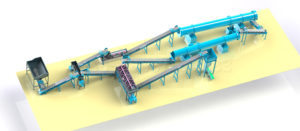
In the bio organic fertilizer production line, there are different types of fertilizer equipment to complete the production process of bio fertilizer. It is equipped with fermentation compost turning machine, fertilizer mixer, fertilizer crusher and fertilizer granulator. Each series of fertilizer machines are designed for different types and models. Like fertilizer granulator, in the production line of biological fertilizer, we can use disc granulator to produce biological organic fertilizer granulator. Sometimes, drum granulator can also be used to produce biological organic fertilizer granulator. This type of fertilizer granulator is usually used in the production process of NPK fertilizer. Detailed info to start a bio fertilizer plant project, welcome go to https://organicfertilizerproductionline.com/bio-fertilizer-plant-project/

Tuesday, 23 June 2020

Organic fertilizer fermentation systems

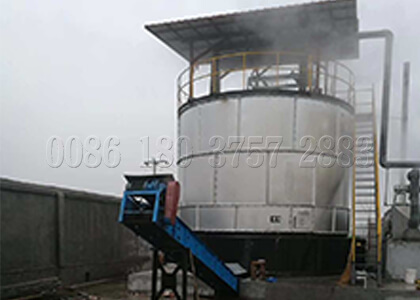
When organic fertilizer fermentation, organic fertilizer equipment is helpful to prepare organic fertilizer such as chicken, pig, cow dung and straw, which affects the decomposition quality of organic fertilizer and improves the fermentation efficiency of organic fertilizer. The following are the equipment required for the production and fermentation process of organic fertilizers.


Loader feed hopper

Loader feeding hopper is a new type of machinery that integrates capacity and feeding materials. It is equipped with a storage silo, anti-clump crushing device, out-of-material adjustment system and conveying device. The function can transport the material at a uniform speed and can operate continuously. Especially suitable for large and medium-sized fertilizer plants. For the transfer and accumulation of organic materials during fermentation, it is also suitable for engineering applications such as aquaculture.
Loader feed hoppers are mainly used for mechanized feed and uniform delivery of raw materials. Raw materials can be supplied continuously by forklifts to reduce manual fatigue. There is a crushing and feeding device in the middle of the silo. There is too much material in the silo to start the crushing device. The spindle runs to crush the accumulated material, which makes the material fluffy and remains on the conveyor belt. It is suitable for the uniform transport of various solid materials and certain moisture materials.

Dehydrator

Some fermentation raw materials have too high water content, and dehydration needs to be treated before fermentation.
The machine can be widely used in chickens, cattle, horses, all kinds of animal and poultry manure, wine, starch residue, sauce slag, slaughterhouses and other high concentration for ganic wastewater separation. This machine after the solid liquid separation dehydration, low water content, the appearance of fluffy, no viscosity, no odor, no hand press. After treatment, animal and poultry droppings can be packaged or sold directly. The water content of animal and poultry manure after treatment is the best condition for the fermentation of organic fertilizer of animal and poultry manure, which can be fermented directly to produce organic fertilizer.
1。 The water content is between 80% and 90%, and the water content is between 40% and 50%.
2。 Production capacity varies according to the nature of raw materials: 6-8 cubic meters/hour of chicken manure, 8-10 cubic meters per hour of pig manure, 10-12 cubic meters/hour of cow dung, 10-15 cubic meters/hour of pig manure, 15-20 cubic meters/hour of cow manure.
3。 The main components of the sieve are stainless steel, while the rest are carbon steel.
Straw crusher
In the fermentation raw material, if the straw raw material is too large, it needs to be crushed and processed into small raw materials, in order to shorten the fermentation time of the raw material. Straw shredder can crush corn straw, straw, peanut skin, beans talk, flowers and other burning residue. It avoids the burning of crop straw, protects the environment, and effectively develops renewable energy. The machine is reliable in operation and easy to operate and maintain. The equipment has a wide range of raw materials and is suitable for crop straw.

Organic fertilizer fermentation

Composting dumper

It is a flipmachine for slot compost. Suitable for aerobic fermentation, can be used with solar fermentation tanks, fermentation tanks, transshipment machines. The function of a machine multi-slot can be achieved by matching with the transfer machine. Depending on the width of the groove, the finlimbs can be divided into 3 m, 4 m and 5 m. Different specifications can be customized according to customer requirements and lifting systems can be installed.
Organic waste such as sludge waste, sugar mill filter, inferior slag cakes and straw sawdust are rotated and fermented on this machine. Widely used in organic fertilizer, fertilizer, sludge pile, horticulture pitch, mushroom cultivation plant fermentation compost and dehumidification operations.

Wednesday, 10 June 2020

Bio-organic fertilizer production process

Bio-organic fertilizer refers to the main raw material of livestock and poultry manure, inoculated with microbial complex bacteria, fermented and decomposed to completely kill pathogens, insects and eggs, fertilizers with microbial fertilizer and organic fertilizer effect, etc. Bio-organic fertilizer generally contains a lot of Nitrogen, phosphorus, potassium and other elements and calcium, magnesium, sulfur, iron, boron and other trace elements, as well as a large amount of organic matter and humic acid substances, make the fertilizer supply balanced. The bio-organic fertilizer production line processes the fermented material into the final organic fertilizer.
Raw material for bio-organic fertilizer production
The main raw materials for bio-organic fertilizer production are agricultural wastes such as livestock and poultry manure and crop straws.


Mixed ingredients in bio-organic fertilizer production

The source of raw materials, fermentation method and equipment are different, and the ingredients are also different. The specific formula depends on the source of the organic material. The general principle of ingredients is: the organic matter content of the total material should be greater than 30% (preferably 50%-70%), carbon to nitrogen ratio (15:1)-(20:1), pH value should be 6-7.5, including The water content should be around 50%, and the water content should be adjusted to 50%-70% during inoculation.

Fermentation maturity

It can be laid flat or fermented in a fermenter. Fermentation tanks are usually placed in closed or semi-closed fermentation chambers. The effect is better than flat ground. Every three days, you need to use a fertilizer turning machine to turn it regularly. After 25-30 days of fermentation, the temperature is gradually reduced from 70-80°C to stable, and the decomposition is completed.

Bio-organic fertilizer production equipment and process

Crushing and mixing pretreatment

Crushing equipment: semi-wet material crusher

This machine is mainly used for crushing biofermented organic fertilizer materials with 25% to 50% moisture. The crushing particle size meets the granulation requirements, and can also be adjusted within a certain range according to user needs. It has a good effect on crushing hard materials such as glass bricks, ceramics and crushed stones in organic fertilizer for municipal solid waste.

Mixing equipment: horizontal mixer

The mixer is mainly used for batch mixing of raw materials, and the materials can be fully stirred. The mixing rate is high and the residue is less. It is suitable for the mixing of feed, concentrated feed and premix additives.

Bio-organic fertilizer production process

Granulation equipment

After composting, the material needs to be granulated to have a certain strength and shape before it can be used as an organic fertilizer. Granulation is a key step in the production of bio-organic fertilizer. There are many types of bio-organic fertilizer granulators. According to the structure of the granulator, the aggregate method can be divided into disc granulator, drum granulator, and new organic fertilizer granulator. According to the position of the press roll, the extrusion method can be divided into a double roll press granulator, a flat die granulator and a ring die granulator.

Disc granulator for bio-granular fertilizer production: Disc granulators are widely used, producing less coarse particles, and the granulation rate is greater than 90%, but the powder fineness requirements are higher.

Drum granulator machine: suitable for mass production of cold and hot granulation and high, medium and low concentration compound fertilizers.

New organic fertilizer granulator: used for granulating organic matter after fermentation, it is the latest technology product with many years of research experience.

Double-roller press granulator: The machine has two shafts, one shaft is fixed and the other shaft is movable. The distance between the two shafts can be adjusted. The shaft material will be extruded between the shafts. The material is granulated at room temperature, no drying process is needed, which saves energy and reduces consumption.

Flat die granulator: There is no need to dry and crush raw materials before granulation. It can directly dispense cylindrical particles and save a lot of energy.
More details of different types of granulators, welcome to https://fertilizergranulatorfactory.com/


Screening equipment

Drum screening machine: There is a certain difference in the particle size output by the granulation molding system, which requires screening and classification. The drum screening machine has the advantages of low vibration, low noise, and convenient screen change. The production line is equipped with an automatic feedback system, which screens the unqualified large and small particles, conveys them through a belt hoist, and then crushes them and sends them to the granulator to continue granulation, which is conducive to improving the continuous operation capacity of the production line.
Vibration screening machine: It has better screening effect on materials, but it has more dust than drum screening machine when working.