Showing posts with label Composting Process. Show all posts

Friday, 24 September 2021

What to do in manure fermentation?

1. Requirements for fermentation raw materials

Fermentation raw materials (such as feces and other agricultural wastes) should be fresh and can not be recycled naturally.

2. Requirements for accessories

Fermentation accessories (such as straw, rice bran, etc.) should have moderate water content, strong water absorption, appropriate particle or length, and should not be too large. The addition amount shall be determined according to the moisture content of fermentation raw materials.

3. Strains should be removed

At least 50g (1 or 2) of a ton of raw materials are required for organic fertilizer fermentation strains. Considering that it can not be evenly applied on the fermentation materials, 50g of bacteria and 500g (1kg) of any raw material shall be mixed and stirred evenly, such as wheat drum, sawdust, oil dry, rice bran, etc, Then sprinkle it into the fermentation material, stir it evenly, and stack it for fermentation.

4. Adjust the fermentation water well

The water regulation of raw and auxiliary materials is the most important, which is related to the success or failure of fermentation. The moisture requirement is: after the raw and auxiliary materials are mixed, they are held together, divided into two and fall on the ground. The proportion of general auxiliary materials (such as straw, straw, etc.) is 10% ~ 30% (weight percentage of raw materials). If calculated according to the volume ratio of the two, it is generally 2 parts of raw materials and 1 part of auxiliary materials.

5. The length, width and height of fermentation pile shall meet the standards

The width, height and length of fermentation products shall not be less than 1.5m and 1m respectively.

More details, on organic fertilizer fermentation, go to https://compostturnermachine.com/compost-fertilizer-making-machine/


Thursday, 2 September 2021

How to compost with fertilizer machine?

As an important mechanical equipment in the fermentation process of biological fertilizer project, the dumper needs more attention in the use process in order to be better used and bring higher income.

1. Check whether the oil circuit system and smooth system of the dumper are unblocked. If it is not unblocked, immediately notify the maintenance personnel for maintenance.

2. Check whether the amount of oil in the upender oil tank is satisfactory. If not, add enough. Check whether the hydraulic system leaks;

3. Before starting the stacker, carefully check whether the organization of each part is intact and whether the positioning of each transmission handle and shift handle is accurate and inaccurate. You should also carefully maintain the smooth operation of the machine as required.

4. Operators must be present before going to work.

5. Before starting the stacker, the rolling part of mechanical energy shall be rolled. Investigate whether the machine has abnormal rolling, and notify the maintenance personnel to repair in time.

6. When starting the stacker, first turn on the power switch to energize the machine, and then turn on the switch of electric oil pump and each motor for trial operation. After the operation of the rail changer stops, operate on the upper rack.

7. During the operation of the dumper, if abnormal conditions such as spindle vibration, loud noise, or high pressure and high temperature exceeding 65 ° C are found, it shall be handled and checked with the technician immediately;

8. Except for the maintenance and repair carried out by relevant personnel during the operation of the dump machine, other personnel shall stop the machine.

9. If there is a problem with the dumper, immediately inform relevant personnel to find out the cause and eliminate the problem. It is not allowed to deal with it without authorization. It is forbidden to operate the equipment with disease.

10. After the operation of the upender, turn off the fan and let the drum run for 2-3 minutes. Desilting can be carried out before shutdown. After that, the tipper shall be cleaned, ironed and dedusted, oiled smoothly, and the power supply shall be blocked.

Thursday, 26 August 2021

Movable Turner for Windrow Composting

Walking organic fertilizer dumper is the most widely used fermentation dumping equipment in the process of organic fertilizer production. The machine adopts four-wheel walking design, in which the small machine adopts frame structure and the large machine adopts box structure. The main components include: diesel engine (including automatic ignition mechanism), direction control device, speed change device, differential device, rotary shaft lifting device, rotary device and crushing device.

The composting tuner is driven by chain and gear. The front wheels control the travel direction and use non slip tires. They can move forward, backward and turn, and are controlled by one person. The whole vehicle rides on a long pile of prefabricated fertilizer, and the frame with rotating knife shaft at the bottom is used to mix, loosen and move fertilizer-based raw materials. After passing the car, it was tampered with the new bar stack. The walking organic composter is equipped with baffle to prevent mixing. Material dispersion. The machine can be used in open areas or workshop sheds.

Compared with other models such as "tipping machine", "mixer" and "screw tipping machine", the walking organic fertilizer mixer has remarkable characteristics:

1. It is more suitable for the fermentation mechanism and process requirements of fresh chicken manure biological fertilizer project, and can effectively mix viscous chicken manure with microbial preparations and straw powder. It creates a better aerobic environment for material fermentation. Under the characteristics of this loose material, it is heated in one day, tasteless in two days, dry in three days, and become fertilizer in five or seven days. 

It is not only faster than deep tank fermentation, but also effectively prevent hydrogen sulfide, amine and indium in the fermentation process. The generation of harmful and malodorous gases such as indole meets the requirements of environmental protection and can produce good bio organic fertilizer.

2. The whole machine has the advantages of appropriate power, low energy consumption and large output, which reduces the production cost of bio organic fertilizer. According to the technical parameters of the machine, more than 300 cubic meters of fresh chicken manure can be mixed every hour. It can be converted into 100-150 tons of synthetic fertilizer. 

In an organic fertilizer plant with a daily output of 30 tons of finished fertilizer, workers only need to work for more than 10 minutes (subject to the actual rotation time). The energy consumption per ton of fertilizer is less than 1kW, which makes the finished fertilizer form an obvious price advantage.

3. The operating room is surrounded by glass, and the panoramic cab is equipped with air conditioning equipment to provide a comfortable working environment for the operator.

4. The overall structure of the whole machine is reasonable, the rigidity of the whole machine is good, the stress is balanced, simple and firm, the performance is safe and reliable, the operation is convenient, and the field applicability is strong. Except for the solid frame, all parts are standard components, which are easy to use and maintain.

5. Low price, low investment threshold, suitable for national conditions and public opinion.

Friday, 20 August 2021

Fermentation Equipment for Composting

The position of fermentation equipment in the bio fertilizer project is very high. The quality of organic fertilizer largely depends on the fermentation process. Organic fertilizer fermentation equipment is very important in the whole production process. The heating time of organic fertilizer equipment in organic fertilizer fermentation refers to the composting process. In the early stage, the temperature of composting gradually increased from ambient temperature to 45 ° C. Microorganisms are mainly thermophilic microorganisms.

When organic fertilizer is fermented at high temperature, the temperature rises to more than 45 ℃ and enters the high temperature period. At this time, thermophilic microorganisms are squeezed and even die, while thermophilic microorganisms rise to be dominant microorganisms. Before granulation, the organic fertilizer granulator continues to oxidize and differentiate compost and newly formed soluble organic matter, and disordered organic matters such as hemicellulose and protein also begin to differentiate strongly.

In short, the stacker is very important and indispensable in the bio organic fertilizer production line. Let's take a look at the characteristics of some chain plate lathes:

1. It adopts chain drive and rolling support plate structure, with small turning resistance and energy saving. It is suitable for deep groove operation.

2. The turnover tray is equipped with flexible tensioning and elastic damping system to effectively protect the driving system and working parts.

3. The tumbling tray is equipped with 390 removable wear-resistant machetes with strong crushing capacity and good oxygenation effect.

4. When turning over, the materials stay on the tray for a long time, are scattered at a high position, are in full contact with the air, and are easy to reduce humidity.

5. The turnover operation at any position in the groove can be realized through horizontal and vertical displacement, which is flexible.

6. The lifting of working parts is controlled by hydraulic system, which is flexible and safe.

7. It can remotely control the machine forward, traverse, overturn and fast backward to improve the operating environment.

8. It can be equipped with trough distributor, automatic discharge device, solar fermentation room and ventilation and aeration system.

9. Equipped with slot shifting machine for slot changing, multi slot operation of lathe can be realized and investment can be saved.

More types of machines for composting, go to https://compostturnermachine.com/

Wednesday, 9 June 2021

Fertilizer Compost Production Tech

The fermentationtechnology of organic manure composting includes trough composting and window composting. Trough composting is used for large-scale composting, while window composting is used for small capacity composting.

The principle of organic manure ditch composting fermentation: using biological characteristics and mechanization technology, using natural microorganisms to make cow manure completely rotten, organic matter can be converted into organic matter, carbon dioxide and water, this method of fermentation time is short, can ferment cow manure completely rotten in 15 days, easy to realize industrial scale production, not affected by weather and season, and has little environmental pollution.

It is beneficial to the commercialization of organic manure production. According to the different dumpers, the width of the fermentation tank is generally 3-20m, the depth is generally 0.8-1.5m, and the length is 50-100m. It can be designed in the organic fertilizer production line according to the actual situation.

Fermentation conditions of organic fertilizer compost.

Window composting fermentation principle of organic manure: window composting fermentation is a process of fermenting and decomposing raw materials and mixtures in long strip compost, which can maintain the aerobic state of compost through manual or mechanical periodic turning and natural ventilation. The section of the pile can be trapezoid, trapezoid or triangle. Window composting fermentation is to spread the materials in rows and stack them in the open air or under the scaffold. Each row is 2-3m wide and 1-1.5m high. The length depends on the actual situation.

No matter what kind of organic manure compost fermentation, is an essential part of the organic manure production line. We can provide customized and professional design for the breeding industry, which can not only solve the pollution of feces, but also realize the recycling of waste.

More detailes, go to https://compostmachinery.com/


Thursday, 29 April 2021

Pelletizing process for compost business

Fertilizer granulator is designed for the production of organiccompost granulator or compoundcompost granulator. In the process ofcompost production, it is necessary to design and equip in thecompost manufacturing process to complete the granulation process.

In the organiccompost production line, different types and series ofcompost machines will be equipped to complete the production process.compost granulator has the important characteristics of organiccompost granulator

1. The particles are spherical;

2. High content of organic matter, which can realize the granulation of pure organic matter;

3. Organic particles can be embedded in each other under certain force, so there is no need to add adhesive in the granulation process.

4. The particles are solid and can bescreened after granulation to reduce the consumption in the drying process.

5. The organic matter after fermentation does not need to be dried, and the moisture content of raw material is 20-40%

Plate mold granulator is usually used in biologicalcompost production line to complete the granulation process. In the production of bio organiccompost, the working mode of flat mold granulator is very important. The selected raw materials are evenly fed into the plate molding granulator, Then the cylindrical particles are extruded under the extrusion of the die. After extrusion granulation, the hardness of organiccompost particles is moderate and the shape is neat. After entering the shot blaster, the particles rotate and rub with the inner wall of the shot blaster. It has smooth shape, uniform size and easy sizing. Plate molding granulator in the process of low temperature, can better maintain the internal nutrition of raw materials. After molding, drying and cooling steps can be omitted, and finishing can be continued. After drying, cooling, screening, packaging and storage.

Fertilization equipment

The flat mold granulator has the advantages of simple operation and low energy consumption. The pelletizing production lineof flat mold organiccompost integrates fermentation and processing, with mature technology and high commercial value of organiccompost. Organiccompost products can not only provide comprehensive nutrition for crops, but also have long-termcompost effect, which can increase soil organic matter and promote microbial reproduction.

Usingcompost equipment to complete the production process ofcompost granulation process is simpler and easier to operate. At the same time, the use ofcompost equipment also improves the efficiency ofcompost production process.

Sunday, 28 June 2020

Belt Conveyor Characteristics


The belt conveyor belt moves according to the principle of friction transmission. Suitable for conveying powder, granular and small materials and bagged materials, such as coal, gravel, sand, cement, fertilizer, grain, etc. The total length and assembly form of the belt conveyor can be determined flexibly according to the user's requirements. The driving device can be an electric roller or a belt driving frame.
Belt conveyor is mainly composed of driving device, driving roller, conveyor belt, idler, tension device, cleaning device, etc.

The driving device transmits the driving force of the motor to the conveyor belt to provide power for the continuous operation of the conveyor belt. It consists of motor, mechanical reducer, coupling and other components.
The driving drum of belt conveyor is a kind of power transmission device. In actual production, it can be divided into single drive drum and double drive drum. It is usually connected and installed by special steel plates by welding. The utility model has the advantages of simple transmission, convenient assembly, convenient disassembly, etc.

The belt of belt conveyor is the part of pulling and conveying materials, so the belt should have enough strength.

The supporting roller of the belt conveyor mainly provides enough supporting force for the belt, and the supporting roller is evenly distributed under the belt to ensure that the belt can run safely and stably when the load is large.

The tension device of the belt conveyor provides enough pre tension for the conveyor belt, so there is a large friction between the conveyor belt and the conveying roller when conveying materials.

The cleaning device of the belt conveyor is mainly used to clean the contents between the conveyor belt, the conveyor drum and the idler, so as to provide a clean and safe operating environment for the conveyor belt.

Belt conveyor can be used for horizontal or inclined conveying. It's very convenient to use. It is widely used in various modern industries, such as mine transportation, mining transportation, fertilizer production line transportation, etc. According to the conveying requirements of the production process, the conveying system can be independent or multi conveyor, or it can be composed of horizontal or inclined conveying system and other conveying equipment to meet the needs of production lines with different layout forms. Click here for more.

Wednesday, 1 April 2020

Cow Manure into Compost Fertilizer

Cow dung or cattle manure is used in many rural areas as fertilizer for agricultural produce. This is a fertilizer that is not so full of nitrogen, and the high ammonia levels in it can burn plants once the manure is fresh when it is applied. If the same manure is composted, it may be the kind of fertilizer which is helpful to plants.

Most cattle manure is composed of grain and digested grass. It really is full of nutrients and has an increased content of organic materials. Taking a look at its number of vital elements, it offers 3 percent of nitrogen, 2 percent of phosphorus, and just a percent of potassium. Besides this, its content has several potentially dangerous pathogens and also high amounts of ammonia. This is the major reason why the manure has to be aged prior to it being used as fertilizer.


When you compost cow manure it is possible to get rid of the ammonia from it and also aid to remove ammonia gas that can be harmful and weeds and seeds that are point about this manure, as well as any dangerous pathogens like E.coli. The top content of organic matter that cow manure has, is added to the soil and might help in greatly improving its ability to hold and retain moisture. This, subsequently, reduces the amount of water that plants fertilized with this composted cow manure will be needing. It also helps in boosting the aeration in the soil, and break up soil that has been compacted. Composted cow manure may have beneficial bacteria, that convert easily into nutrients which are easily accessed and release gradually, to ensure that plant roots which are tender will not get burnt.

To compost cow dung a location where you can create a  pile which is a minimum of 3 to 4 feet high, should be chosen. A 3-inch layer of dry organic material must first be spread within the chosen area. This needs to be covered with a 2-inch layer of cow manure. This layering has to be continued up until the pile is approximately four feet in height. The pile should be watered and kept damp when you build it up and whenever the required height is reached it must be engrossed in a layer of soil.

The pile created has to be turned over once every 72 hours as well as its moistness maintained, without making the mass soggy. When you find yourself turning on the pile, check its temperature at its center. It will be between 120 to 160 degrees Fahrenheit. The compost heap will gradually turn brown and may offer an earthy smell. During this period, there will be no heat produced at its center, and also this means the compost is able to be applied.

When the compost pile will not warm up, it implies it has a smaller amount of manure and also this should be added. Excessive manure is likely to make your pile quit an unpleasant and robust odor. Add more of organic material.

It could always assist to create compost inside a compost bin as it helps to include the compost. Ensure your compost pile is no more heating up before you use it on the plants.

Wednesday, 25 March 2020

Why to use mixer in composting?

Compost mixers are mainly used as a type of blending. And they are available in very handy with regards to producing compost. And in addition there are some pretty top of the line manufacturers that begun to produce both double shaft and single shaft compost mixers. Our article features some good information about how the compost mixer works.


When it comes to the whole process of compostgranulation, it is necessary that this mixture be mixed in a even manner and in accordance with a particular formula. Because of this, mixing equipment for compost is necessary within the compost processing industry. In the mixing process, there is certainly typically the issue of low material residue and mixing uniformity. Hence, mixers are widely necessary for mixing the raw materials.

This can be done both for compound compost production along with organic composts. With regards to a double shaft compost mixer, you can use it for the purpose of mixing and humidifying your mixture for an exceptional finished product. The horizontal mixer is composed of a frame, mixing part and the transmission part. As the desired number of powdered material flows to the blenders mixing tank, a pressurised stream actually starts to spray on your raw materials.

Then, the motor produces the speed to get the rate reducer which rotates the blenders main shaft. Welded into the main shaft are some spiral blades which continue on to blend the materials evenly. After this is done, they go on to make some balls that most contain the appropriate uniform content of moisture. As soon as your materials are fully mixed, the discharge port underneath the tank opens along with your perfectly mixed materials will likely discharge and go onto the compost granulation machine.

Because of the angles of your mixing blades, your mixture will likely be mixed in a effective, yet quick way. And yes it doesn't even matter the dimensions of your compost being produced. In addition, your blender will also be capable of mix materials that also contain around 30% moisture or rather some very viscous materials.

When it comes to the functions of the compost mixer, there's quite a few to benefit from. The residual importance of the materials is likewise significantly reduced mainly because that there is a special minimum clearance between your mixer body and also the rotor. Materials are finally able to be mixed completely evenly. Along the way, materials for any size may be accommodated and simply crushed for production.

On account of the complete compost mixer design, you can now be stress free because it is more user friendly. And is particularly very simple to maintain. The mixer also allows faster mixing along with faster discharge speeds. As well as the stainless-steel blades are fantastic given that they give users an extended lifespan given that they don't wear easily.


While we conclude, we now have just checked out how the compost mixer works. So we have also investigated the primary features which come with it. The compost mixer makes your task easier and it also will give you a great end product!

Thursday, 19 March 2020

Cow Manure Composting

Cow dung is a great source of raw materialwhen making organic composts. There are a variety of farmers, however, who don’t learn how to handle the cow dung. Several farmers make use of this fresh cow dung as composts by making use of them right to their crops. If fresh cow dung gets applied directly, it might bring problems for the crops because of presence of harmful elements from the manure, and might even lead to pollution. Therefore, you should locate a cow dung compost that will eliminate all of these problems.


There are many complete compost making machines available, in addition to a variety of specifications and types of machines to your choosing. With the aid of these appliances, you ought to make organic compost faster and a lot more conveniently. What’s more, the cow dung manure produced will probably be healthier and fertile. If you’re considering to produce cow dung organic manure, you’ll have two compost production lines to decide on. You could make both pellets compost and cow dung powder compost.


Cow Dung Powdery Compost Making Line

If you want to make cow dung manure powder, there are a few equipment recommendations so that you can consider:

- Dewatering screw press machine. When you make compost, it’s necessary to have a dewatering machine. Making use of this device, the solid cow manure will be more convenient to transport. What’s more, you can also sell the cow dung manure directly or put it to use for producing organic composts.


- Cow dung powder making machine. By equipping yourself with powder making machine, you must obtain fine cow dung manure powder. A vertical crusher plus a semi-wet material crushing machine are a great method to pulverizing animal manures.

- Small-scale compost turner. A compost turning machine is a fundamental cow dung processing equipment. With the help of a turning machine, you’ll have significantly less time for composting. As well, the labor force will likely be significantly reduced.

Since fresh cow dung contains high moisture, you need to dry it first before composting. The cow drying machine can assist you get both solid and liquid cow dung manure. It makes use of screw press force to separate the liquid from the available materials. As you collect the solid, the liquid should be discharged via the pump such that you can fertilize them into your plants directly.

Just How Can Cow Dung Compost Machines Work with Making Cow Dung to Compost Granules?

When you make cow dung compost granules, it’s a necessity to covert the compost powders into fine compost pellets. Aside from the compost powder making machine, you additionally call for a compost pellet equipment, drier, cooler, coating machine, and screening equipment. Now how do these appliances make powder into compost pellets?


- Cow dung granulating. A granulator is mostly employed for converting powders into pellets. Afterward, you are able to feed them to the pellet making machine.

- Drying and cooling. Considering that the granulator makes pellets in extremely high temperatures and implements wet granulation techniques, the finished granules are humid and heated. The drying machine, and also the cooling machine,  are often more convenient in employing to help make compost pellets.

- Pellets screening. Separate unqualified pellets in the specific products by utilizing rotating screening equipment.


- Quality products coating. By coating the compost granular, it enhances the pellets’ physical properties. More detailed on cow dung processing machines, welcome to CDPM.

Monday, 9 March 2020

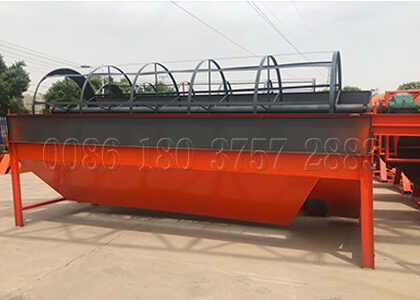
Compost Screening Process

How to select unqualified materials out when composting

Have you figured out what should and ought to get into your compost? By screening materials that you simply do not qualify, you will possess the best ingredients for the compost pile.

Compost Materials

The type of material that define compost are raw and they also typically originate from waste. These organic disposable materials can come from many different places in and around your house. They are able to are available through your garden or even your home. The greater number of  organic waste that is used for composting, the a smaller amount of it that winds up in landfills.


Recent studies performed by the EPA have revealed that more than twenty percent of the country's solid waste system contains food scraps and yard trimmings. This results in a lot of waste that ultimately ends up in landfills if the more eco-friendly alternative would be to compost it instead.

Some Great Benefits Of Composting

Among the finest top reasons to compost is basically that you will be aware of what exactly is entering your composting material, and you will keep things that you do not want out. You have the ability to balance the compost in your specifications, and there is no need to rely on just one single component.

Instead, you are able to choose an array of ingredients for the pile. These ingredients are generally separated into green and brown materials. The better variety you use in choosing the materials, the better nutrient rich the compost will be. It will likely be filled up with diverse microbial life and micro nutrients which can be necessary from the composting process.

Ingredients To Incorporate

The following is a small list of things that you should use for composting material. They include:

Grass clippings

Leaves

Coffee grounds

Dry pet food

Lint from dryer

Organic manure

Wine

Dust

There are many items that you could include in your compost, but you should know that these materials may require additional prep time before they can be ready. You may mix them in with your composting materials, or you can put them inside a pile within your backyard.

However, remember that it may take several seasons before they are compatible with composting. These products include:

Newspaper

Paper bags

Toothpicks

Egg cartons

Saw dust

Pine cones

Corn cobs

Items To Screen

There are many materials that ought to be avoided when composting, and there are many materials that happen to be definite no's within the composting process.

Those items that needs to be avoided include materials such as twigs and enormous branches.

Animal products and excrement should never be included in compost. Materials like:

Animal droppings

Fish skin

Fish bones

Animal bones

Milk

Cheese

The Best Way To Increase Composting Time

Compost will quickly 'cook' once temperatures reach 120 degrees F, and there are many tips that you can follow to increase this technique.

After screening the unwanted materials, shred the bigger materials to your compost. This allows bacteria to break it down faster.

It is best to include large piles of materials to your compost at one time.

Finally, always be certain your compost is with the sunlight.

Composting is a wonderful way to increase the healthiness of the garden, while also saving the environment. To help keep your compost pile organic, screen for unqualified materials for example animal waste, animal products and synthetic chemicals.

Thursday, 13 February 2020

How to dewater cow dung?

A Good Look In The Cow Dung Dewatering Machine & Its Role For Making Cow Dung Compost

If you would like make the most from cow dung, then it is best to create cow dung manure. Basically, by composting the cow dung, the microorganisms will naturally disintegrate every one of the organic matter from the dung. A lot of heat will be released which can kill any eggs, pathogens and seeds within the cow dung. There are lots of steps with regards to turning cow dung into compost and you will have to prepare a variety of raw materials, develop a compost pile and after that transform it. Within the raw materials, you need to manage the liquid content and also add sawdust and straw as a way to control the C/N ratio. After cow dung is converted into compost, this can then be used to make fertilizer. We are going to now take a closer look at the initial step of producing cow dung compost that will call for a dewatering machine.
Cow Dung Dewatering Machine for Sale
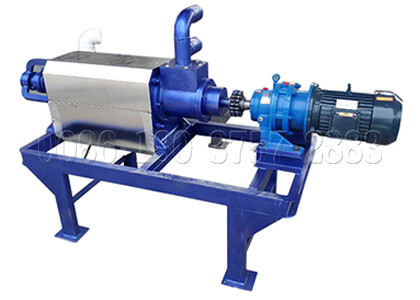
This type of water content from the cow dung is an extremely important aspect when making cow dung compost as it might potentially hamper the entire process of composting as well as its overall quality. When you don't know already, fresh cow dung from cows typically has 80% water content. However, a water content of 50 - 60% is required for the composting process. For that reason, a cow dung dewatering machine is essential as a way to remove several of the water through the cow dung. When this machine is commonly used to dewater the cow dung, it will become loosened which prevents caking which happens to be important for the compost process. Utilizing a cow dung dewatering machine, it is simple to remove water when necessary to make the best quality compost.

There are actually typically two different kinds of cow dung dewatering machines and they range from the inclined screen separator machine as well as the solid liquid separator machine. Both of these machines try to remove water from cow dung through squeezing it. This type of water that is certainly separated in the cow dung can actually be used to make biogas and even liquid fertilizer. In terms of the dewatering machines, the parts which come into connection with the cow dung to squeeze it are usually made out of 304 steel. It is a very strong steel that is highly immune to corrosion. However, if you would like make the most of your dewatering machine, it is essential that you clean the screen in particular after using it. A large number of dewatering machines are unable to only assist cow dung, but can also be used to dewater pig manure, chicken manure as well as other animal waste.

Having said that, there are several more elements of creating cow dung compost that ought to be considered as well as the dewatering machine. This machine is just one step and you also have to add other materials towards the dung for example rice hull, straw and even saw dust. The cow dung will then have to be composted either using windrow composting, fermentation grooves or maybe in a fermentation tank. So, if you're considering making cow dung compost, be sure you keep learning and researching the process in order to eventually master each step.