Tuesday, 23 June 2020

Organic fertilizer fermentation systems

When organic fertilizer fermentation, organic fertilizer equipment is helpful to prepare organic fertilizer such as chicken, pig, cow dung and straw, which affects the decomposition quality of organic fertilizer and improves the fermentation efficiency of organic fertilizer. The following are the equipment required for the production and fermentation process of organic fertilizers.


Loader feed hopper

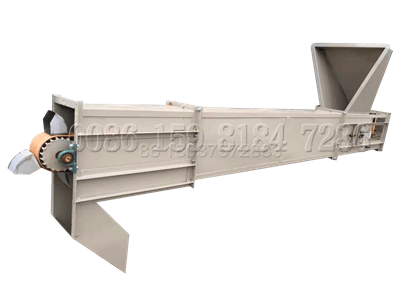
Loader feeding hopper is a new type of machinery that integrates capacity and feeding materials. It is equipped with a storage silo, anti-clump crushing device, out-of-material adjustment system and conveying device. The function can transport the material at a uniform speed and can operate continuously. Especially suitable for large and medium-sized fertilizer plants. For the transfer and accumulation of organic materials during fermentation, it is also suitable for engineering applications such as aquaculture.
Loader feed hoppers are mainly used for mechanized feed and uniform delivery of raw materials. Raw materials can be supplied continuously by forklifts to reduce manual fatigue. There is a crushing and feeding device in the middle of the silo. There is too much material in the silo to start the crushing device. The spindle runs to crush the accumulated material, which makes the material fluffy and remains on the conveyor belt. It is suitable for the uniform transport of various solid materials and certain moisture materials.

Dehydrator

Some fermentation raw materials have too high water content, and dehydration needs to be treated before fermentation.
The machine can be widely used in chickens, cattle, horses, all kinds of animal and poultry manure, wine, starch residue, sauce slag, slaughterhouses and other high concentration for ganic wastewater separation. This machine after the solid liquid separation dehydration, low water content, the appearance of fluffy, no viscosity, no odor, no hand press. After treatment, animal and poultry droppings can be packaged or sold directly. The water content of animal and poultry manure after treatment is the best condition for the fermentation of organic fertilizer of animal and poultry manure, which can be fermented directly to produce organic fertilizer.
1。 The water content is between 80% and 90%, and the water content is between 40% and 50%.
2。 Production capacity varies according to the nature of raw materials: 6-8 cubic meters/hour of chicken manure, 8-10 cubic meters per hour of pig manure, 10-12 cubic meters/hour of cow dung, 10-15 cubic meters/hour of pig manure, 15-20 cubic meters/hour of cow manure.
3。 The main components of the sieve are stainless steel, while the rest are carbon steel.
Straw crusher
In the fermentation raw material, if the straw raw material is too large, it needs to be crushed and processed into small raw materials, in order to shorten the fermentation time of the raw material. Straw shredder can crush corn straw, straw, peanut skin, beans talk, flowers and other burning residue. It avoids the burning of crop straw, protects the environment, and effectively develops renewable energy. The machine is reliable in operation and easy to operate and maintain. The equipment has a wide range of raw materials and is suitable for crop straw.

Organic fertilizer fermentation

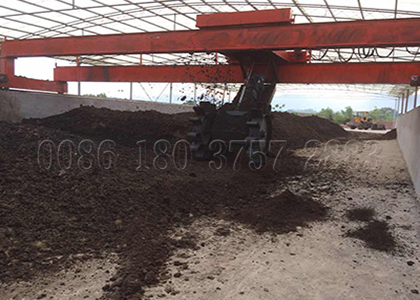
Composting dumper

It is a flipmachine for slot compost. Suitable for aerobic fermentation, can be used with solar fermentation tanks, fermentation tanks, transshipment machines. The function of a machine multi-slot can be achieved by matching with the transfer machine. Depending on the width of the groove, the finlimbs can be divided into 3 m, 4 m and 5 m. Different specifications can be customized according to customer requirements and lifting systems can be installed.
Organic waste such as sludge waste, sugar mill filter, inferior slag cakes and straw sawdust are rotated and fermented on this machine. Widely used in organic fertilizer, fertilizer, sludge pile, horticulture pitch, mushroom cultivation plant fermentation compost and dehumidification operations.

Saturday, 20 June 2020

two-in-one granulators features

Advantages of two-in-one organic fertilizer granulators

The new two-in-one organic fertilizer granulator is a combination granulator that can be used for mixing organic fertilizer and inorganic fertilizer. The main way of working is to make the ball by wet method. Fertilizer spun and moved through a certain amount of water or steam in the barrel, creating a squeeze pressure between the material particles to form particles.

The granulator improved the existing problems in the use of the original wet continuous pusher granulation machine, and adopted the rotary cylinder method for the secondary granulation segment and the stirring teeth, which not only met the requirements of particle quality, but also solved the problem of paste wall caused by excessive viscosity and humidity of some materials. It plays an important role in the production line of organic fertilizer and compound fertilizer compound granulation

Raw materials: cow dung, crop straw, wine waste, sage slag, scum, animal waste ,organic fertilizer production line;
Features: high granulation strength, good appearance quality, corrosion resistance, wear resistance, low energy consumption, long service life, adjustable particle size, easy operation and maintenance.

New type of two-in-one organic fertilizer granulation machine

Different types of granulators can select different raw materials. Zhengzhou SX Heavy Industries Technology Co., Ltd. is a professional fertilizer production machinery enterprises in China. We can produce many different types of granulators. Such as double-roller crushing granulator, disc granulator, drum granulator, flat-molded granulation machine and so on. If you are interested in granulators, please visit our website or contact us for more information.

Friday, 19 June 2020

Fertilizer conveyor design tech


The bucket lifter is a vertical lifting conveyor. It has the advantages of simple structure, small footprint, low maintenance cost, high conveying efficiency, stable operation and wide application.


Bucket lifters are widely used in grain, food, feed, mining and other grain and powdermaterial vertical transport. The height of the lift is high, the fertilizer yield is large, and the lifting speed is high.

In fertilizer production, the bucket lifter is an important equipment in the transportation link. The bucket lifter is suitable for conveying powdery, granular, small pieces of material with a mass density of less than 1.5t/m3, such as coal, cement, gravel, sand, fertilizer, grain, etc., and the bucket lifter will extract the material from the following warehouse.

When the conveyor belt or chain rises to the top, it rotates down around the top wheel and the bucket lifter pours the material into the receiving tank.

The belt is usually a rubber band and is mounted on the drive roller and the shift roller. Chain drive bucket lifters are usually equipped with two parallel drive chains, a pair of drive sprockets and a pair of interchange sprockets. Bucket lifters are usually equipped with organic housings to prevent dust from flying in the bucket fertilizer conveyor lift.

In fertilizer production, due to the limitation of workshop area, fertilizer equipment is constructed in vertical space. The bucket lifter plays an important role in material transportation, production process convergence, space utilization and so on.

Wednesday, 17 June 2020

Pig Manure Disposal

Processing technology of organic fertilizer equipment for pig manure

Organic fertilizer production equipment can use organic fertilizer for harmless treatment of pig manure and other animal waste, high organic matter content, reduce the pollution of farm waste discharge to the environment.
large scale turner machine for composting pig manure

Pig manure organic fertilizer fermentation

The collection of pig manure from the farm, stacked in a fermenter, the collection of attention to the water content of pig manure, generally 40% to 50% is appropriate. Add cotton, wood chips, canola, corn bran and other accessories (prior by straw shredder treatment), the amount of addition is generally 45%-50% of the weight of pig manure, accessories and pig manure fully mixed evenly. During the fermentation of pig manure, microbiological agents are added proportionally and dumped every two or three days. The maximum moisture content in fermentation process is 60%-70%. The temperature of fermentation is low, the intermediate temperature can be up to 60 degrees C, and the temperature is reduced in the later period. Fermentation is 20-30 days in summer and longer in winter.

Organic fertilizer equipment for pig manure

Pre-treatment of organic fertilizer production of pig manure

Fermented pig manure is crushed with a semi-wet material shredder. Use a roller sieve machine to sift out the crushed organic fertilizer powder and prepare processing raw materials. Other nutrients are formulated according to the needs of organic fertilizer and the selected pig manure organic fertilizer is mixed with other nutrients.

Pig manure organic fertilizer granulation processing equipment

Make a compound organic fertilizer into a granular form. There are different types of granulators. According to the needs, the choice of disc granulator, new organic fertilizer granulation machine, roller granulation machine and other granulators, after drying and cooling, can be packaged into commodity organic fertilizer.

Friday, 12 June 2020

NPK fertilizer production

How to avoid fertilizer clumps in NPK fertilizer production

Fertilizer blocking problems usually occur in the process of fertilizer processing, storage and transportation, and are caused by the absorption, dissolution, evaporation and recrystallization of fertilizer particles. In this process, a crystal bridge is formed, causing small particles to form large particles and clump.
So how to avoid the fertilizer clumps generated by NPK fertilization equipment?

1. Choose the right raw material.

Fertilizer production of raw materials, such as ammonium salts, phosphates, trace element salts, potassium salts, etc., mostly contain crystalline water, easy to absorb water, such as ammonium sulfate, phosphate, trace elements easy to reunite, insoluble in water. Urea is prone to extract water and clumps with trace element salts.

Choose raw materials that are not easy to clump and produce fertilizer that does not clump. For example, fertilizers with humic acid as the main raw material and amino acids as the main raw materials are not easy to clump. Also, try to keep the material dry when selecting it.

2. When producing NPK fertilizer, the water content and packaging temperature of the fertilizer should be reduced and the appropriate production time should be selected.

Fertilizer production is generally non-closed. During the production process, the greater the air humidity, the easier the fertilizer is to absorb moisture clumps. Fertilizer production avoids the rainy season and concentrates on fertilizer production on dry days. In the fertilizer production process, the raw material is heated by dryer, so that the water content of fertilizer is controlled at 0.6%, prolonging the cooling time of fertilizer, reducing the packing temperature, making the fertilizer not easy to clump.

3. Add anti-clumping agent to reduce the physical chemical reaction between NPK fertilizer particles.

The higher the room temperature, the easier it is to dissolve. In general, raw materials dissolve in their own crystalline water and cause clumps. Adding talcum powder, humic acid and other non-clumping powders can also be added some surfactants to prevent clumps.

4. Reduce the height of the fertilizer stacking and storage pressure.
The greater the external pressure of fertilizer, the easier it is for the crystal to clump in contact with the crystal, and the smaller the external pressure, the more difficult it is to clump.

5. The NPK fertilizer can be screened with a screening machine to further improve the uniformity of fertilizer particles.
NPK fertilizer particle size is not uniform, particle spacing is small, contact area is large, easy to reunite. If the pressure strength of fertilizer particles is low, deformation and breakage are easily occurred during packaging, transportation and storage, increasing the contact area between the particles, which can also lead to fertilizer clumps.

If the fertilizer plant uses NPK fertilizer production line to produce a large amount of fertilizer, can be used for two screening machines to obtain suitable fertilizer particles.

6. Production of NPK fertilizer particles.

Because of the small contact area between circular particles, it is not easy to crystallize the clumps. Therefore, the granulation of nitrogen and phosphorus potassium fertilizer is beneficial to the storage, transportation and fertilization of fertilizer.

When using roller granulators to produce NPK compound fertilizer particles, the dryer is not used, but the raw materials for the production of fertilizer must have good adhesion.

When producing NPK compounding particles with a disc granulator (or drum granulator), it must be dried and cooled.

Wednesday, 10 June 2020

Bio-organic fertilizer production process

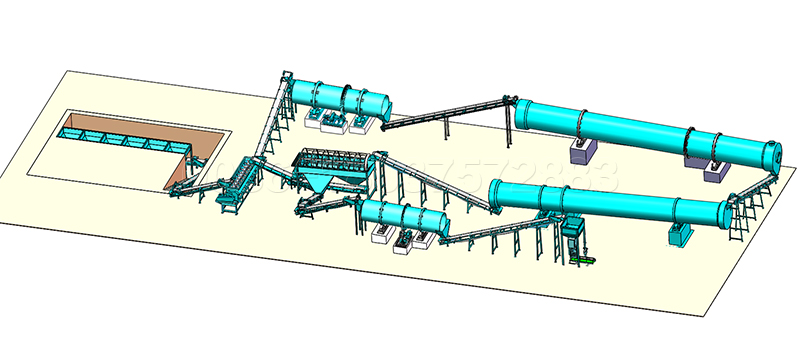
Bio-organic fertilizer refers to the main raw material of livestock and poultry manure, inoculated with microbial complex bacteria, fermented and decomposed to completely kill pathogens, insects and eggs, fertilizers with microbial fertilizer and organic fertilizer effect, etc. Bio-organic fertilizer generally contains a lot of Nitrogen, phosphorus, potassium and other elements and calcium, magnesium, sulfur, iron, boron and other trace elements, as well as a large amount of organic matter and humic acid substances, make the fertilizer supply balanced. The bio-organic fertilizer production line processes the fermented material into the final organic fertilizer.
Raw material for bio-organic fertilizer production
The main raw materials for bio-organic fertilizer production are agricultural wastes such as livestock and poultry manure and crop straws.


Mixed ingredients in bio-organic fertilizer production

The source of raw materials, fermentation method and equipment are different, and the ingredients are also different. The specific formula depends on the source of the organic material. The general principle of ingredients is: the organic matter content of the total material should be greater than 30% (preferably 50%-70%), carbon to nitrogen ratio (15:1)-(20:1), pH value should be 6-7.5, including The water content should be around 50%, and the water content should be adjusted to 50%-70% during inoculation.

Fermentation maturity

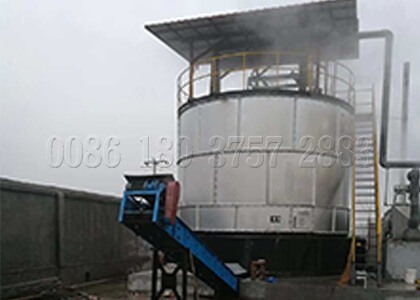
It can be laid flat or fermented in a fermenter. Fermentation tanks are usually placed in closed or semi-closed fermentation chambers. The effect is better than flat ground. Every three days, you need to use a fertilizer turning machine to turn it regularly. After 25-30 days of fermentation, the temperature is gradually reduced from 70-80°C to stable, and the decomposition is completed.

Bio-organic fertilizer production equipment and process

Crushing and mixing pretreatment

Crushing equipment: semi-wet material crusher

This machine is mainly used for crushing biofermented organic fertilizer materials with 25% to 50% moisture. The crushing particle size meets the granulation requirements, and can also be adjusted within a certain range according to user needs. It has a good effect on crushing hard materials such as glass bricks, ceramics and crushed stones in organic fertilizer for municipal solid waste.

Mixing equipment: horizontal mixer

The mixer is mainly used for batch mixing of raw materials, and the materials can be fully stirred. The mixing rate is high and the residue is less. It is suitable for the mixing of feed, concentrated feed and premix additives.

Bio-organic fertilizer production process

Granulation equipment

After composting, the material needs to be granulated to have a certain strength and shape before it can be used as an organic fertilizer. Granulation is a key step in the production of bio-organic fertilizer. There are many types of bio-organic fertilizer granulators. According to the structure of the granulator, the aggregate method can be divided into disc granulator, drum granulator, and new organic fertilizer granulator. According to the position of the press roll, the extrusion method can be divided into a double roll press granulator, a flat die granulator and a ring die granulator.

Disc granulator for bio-granular fertilizer production: Disc granulators are widely used, producing less coarse particles, and the granulation rate is greater than 90%, but the powder fineness requirements are higher.

Drum granulator machine: suitable for mass production of cold and hot granulation and high, medium and low concentration compound fertilizers.

New organic fertilizer granulator: used for granulating organic matter after fermentation, it is the latest technology product with many years of research experience.

Double-roller press granulator: The machine has two shafts, one shaft is fixed and the other shaft is movable. The distance between the two shafts can be adjusted. The shaft material will be extruded between the shafts. The material is granulated at room temperature, no drying process is needed, which saves energy and reduces consumption.

Flat die granulator: There is no need to dry and crush raw materials before granulation. It can directly dispense cylindrical particles and save a lot of energy.
More details of different types of granulators, welcome to https://fertilizergranulatorfactory.com/


Screening equipment

Drum screening machine: There is a certain difference in the particle size output by the granulation molding system, which requires screening and classification. The drum screening machine has the advantages of low vibration, low noise, and convenient screen change. The production line is equipped with an automatic feedback system, which screens the unqualified large and small particles, conveys them through a belt hoist, and then crushes them and sends them to the granulator to continue granulation, which is conducive to improving the continuous operation capacity of the production line.
Vibration screening machine: It has better screening effect on materials, but it has more dust than drum screening machine when working.

Machine Selection Tips

How to choose the right fertilizer turning machine for composting

Fatty fin fish is mainly used for fertilizer fermentation on the farm. The crushed straw and livestock manure need to be fermented to kill a large number of animal feces bacteria, parasites, etc., so as to transform the compost raw materials and shorten the composting time. It is suitable for the mechanism and technological requirements of microbial fermentation of livestock and poultry manure. It can effectively mix fertilizers with microbial preparations and plant straws to create a good aerobic environment for raw material fermentation.
Under this loose material condition, livestock and poultry manure can be heated for 2 days, deodorized for 3 days, and fertilized for about 15 days, effectively preventing the generation of harmful gases such as hydrogen sulfide and amine gas during fermentation, that is, environmental protection and good Bio-organic fertilizer production.

Material pile compost turning machine

The pile turning machine adopts a pile-type ground fermentation process and uses a soft-start steering clutch. The hydraulic push plate does not require manual stacking of raw materials. The use of drum-type hydraulic lifting can greatly save space, time, diesel and manpower, and shorten the fermentation cycle.
It is suitable for small batch production turnover of organic fertilizer, with good economic benefits and low investment.

Simple stacker

It is suitable for aerobic fermentation and can be used in conjunction with solar fermentation chambers, fermentation tanks and mobile machinery. It can be used with mobile machines to realize the function of multiple slots of a machine. The fermentation tank can be discharged continuously or intermittently, with high efficiency, stable operation, firm and durable, and even spreading.
The centralized control of the control cabinet can realize manual or automatic control functions, the electric shovel is durable, the material has a certain number of crushing and mixing functions, and the limit travel switch can play a safety and limit role.
The stacker has high efficiency, stable operation, firmness and durability, and even toss. Widely welcomed by customers, it is the best lathe that our company sells.
How to choose the right fertilizer applicator
Twin-screw compost truck

Feature

. Stirring in raw material conditioning.
. Adjust the temperature of the material stack.
. Improve the permeability of the raw material pile.
. Adjust the water in the raw material pile.
. Realize the special requirements of the composting process.
The screw type compost turning machine is suitable for mass production of organic fertilizer and has economies of scale.